Why most Компостирование органических отходов дома: Методы без запаха для частных садов projects fail (and how yours won't)
Your Compost Bin Smells Like a Crime Scene (And Your Neighbors Are Starting to Ask Questions)
Picture this: You started your home composting project with the best intentions. Maybe you watched a YouTube video, bought a nice bin, and felt pretty smug about reducing your household waste. Three weeks later, your backyard smells like something died in it, fruit flies have formed their own civilization, and your spouse is giving you that look.
Welcome to the club. About 68% of home composting attempts get abandoned within the first six months, according to waste management studies. The dream of turning kitchen scraps into black gold crashes hard against the reality of putrid odors and slimy messes.
But here's the thing—it's not your fault. Well, not entirely.
The Real Reason Home Composting Goes Sideways
Most people treat composting like throwing stuff in a magic box. Add organic waste, wait, get fertilizer. Right?
Wrong.
The main culprit behind failed composting projects isn't laziness or bad luck. It's a fundamental misunderstanding of what's actually happening in that bin. You're not just storing garbage—you're managing a living ecosystem of bacteria, fungi, and microorganisms that have very specific needs.
The Carbon-Nitrogen Disaster
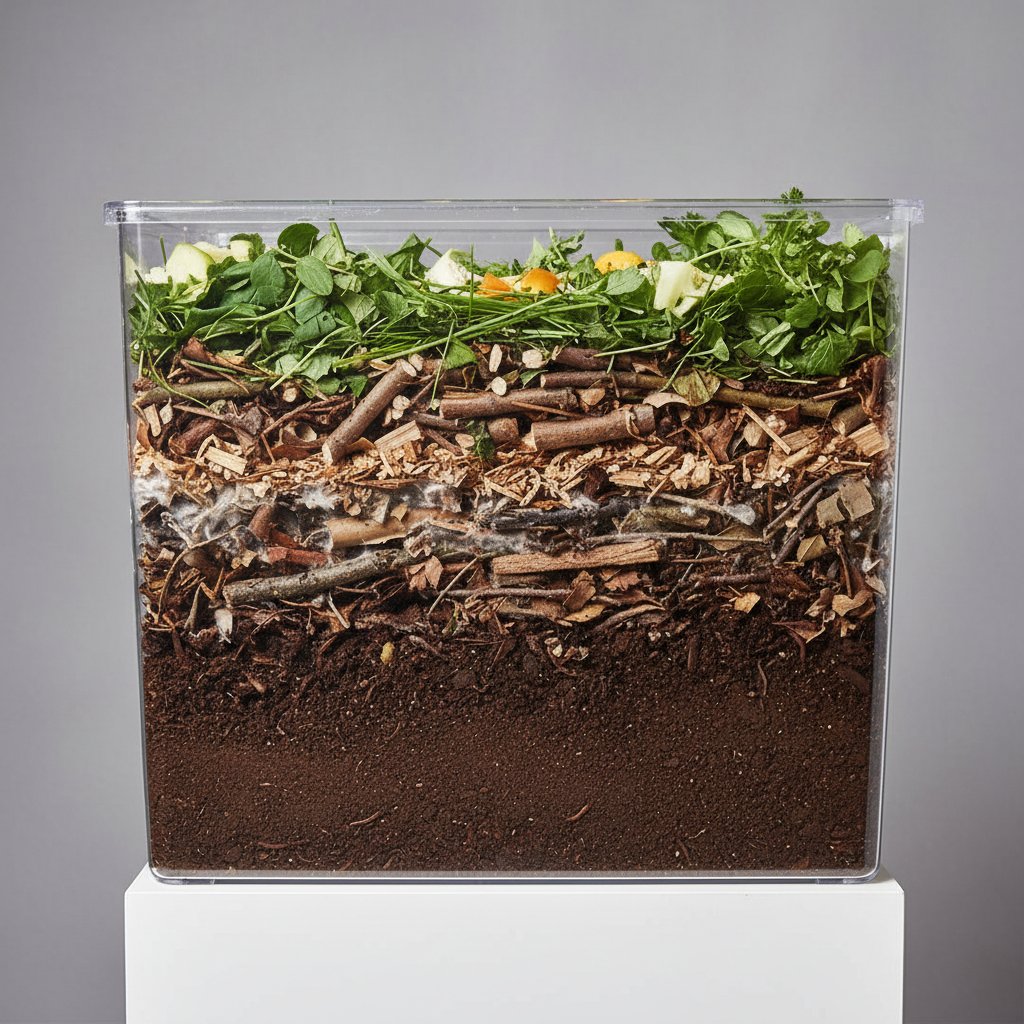
Here's where most people crash and burn: the carbon-to-nitrogen ratio. Your compost needs roughly 30 parts carbon-rich "browns" to 1 part nitrogen-rich "greens." Throw in too many vegetable peels, coffee grounds, and grass clippings without enough dry leaves, cardboard, or wood chips? You've created an anaerobic nightmare that produces hydrogen sulfide—that rotten egg smell that makes your eyes water.
I learned this the hard way when I dumped two weeks of kitchen scraps into my bin without any browns. Within 72 hours, my garage smelled like a landfill in August.
The Moisture Trap
Your compost should feel like a wrung-out sponge—damp but not dripping. Too wet, and you've got a stinking, slimy mess. Too dry, and decomposition grinds to a halt. Most home composters in private gardens never check moisture levels. They just keep adding wet kitchen waste until they've essentially created garbage soup.
Warning Signs Your Compost Is Heading for Failure
Catch these early, and you can save your project:
- Ammonia smell: Too much nitrogen, not enough carbon. Add shredded newspaper or dry leaves immediately.
- Rotten egg odor: Anaerobic decomposition from lack of oxygen. Turn that pile now.
- No heat generation: If your pile stays cold after 3-4 days, you need more nitrogen or your pile's too small.
- Fruit fly invasion: You're not burying food scraps deep enough or your bin isn't sealed properly.
- Matted, slimy layers: Too much grass or leaves clumped together without mixing.
The No-Smell System That Actually Works
After killing three compost piles and annoying my neighbors twice, I figured out a system that produces zero offensive odors. Here's the exact method:
Step 1: Set Up a Two-Bin System
Forget the single bin approach. You need one bin for active composting and one for "curing." This lets you manage batches properly instead of constantly adding to a never-ending pile. Each bin should hold at least 27 cubic feet (3x3x3 feet)—smaller piles don't generate enough heat.
Step 2: Stockpile Your Browns
Keep a dedicated container of carbon-rich materials: shredded cardboard, dried leaves, wood chips, or straw. Every time you add greens, you immediately add 2-3 times that volume in browns. No exceptions. This single habit eliminates 90% of odor problems.
Step 3: The Burial Method for Kitchen Scraps
Don't just toss food waste on top. Dig a hole in your compost, dump the scraps in, cover with 4-6 inches of browns and existing compost. This creates a barrier against fruit flies and contains any initial smells while decomposition kicks in.
Step 4: Turn Every 5-7 Days
Yes, really. Use a pitchfork or compost aerator to move material from the outside to the center. This takes maybe 10 minutes and introduces the oxygen that prevents anaerobic decomposition. Set a phone reminder—you'll forget otherwise.
Step 5: Monitor Temperature and Moisture
Get a $15 compost thermometer. Your pile should hit 130-150°F within 3-4 days if you've got the ratio right. If it's too wet, add browns. If it's too dry, add water when you turn it. Squeeze test: a handful should release a few drops of water, no more.
Prevention: Set Yourself Up for Success
Keep a sealed container in your kitchen for scraps—I use a 1.5-gallon stainless steel pail with a charcoal filter in the lid. Empty it every 2-3 days before it starts smelling.
Never compost meat, dairy, oils, or cooked foods in an open bin. These guarantee odor problems and attract rodents. Stick to vegetable scraps, coffee grounds, eggshells, and yard waste.
Place your bin in partial shade. Full sun dries it out too fast; full shade keeps it too wet and cold. I positioned mine under a tree that gives morning sun and afternoon shade—perfect.
Start small. One 5-gallon bucket of kitchen scraps per week is plenty for beginners. You can always scale up once you've got the system dialed in.
Your compost doesn't have to smell like death. With the right carbon-nitrogen balance, proper aeration, and consistent management, you'll have odor-free black gold in 8-12 weeks. Your garden will thank you, and your neighbors will stop avoiding eye contact.